
informational Pillar guide 8 min read
The Lipizzaner Horses of the Spanish Riding School
Updated September 18, 2026
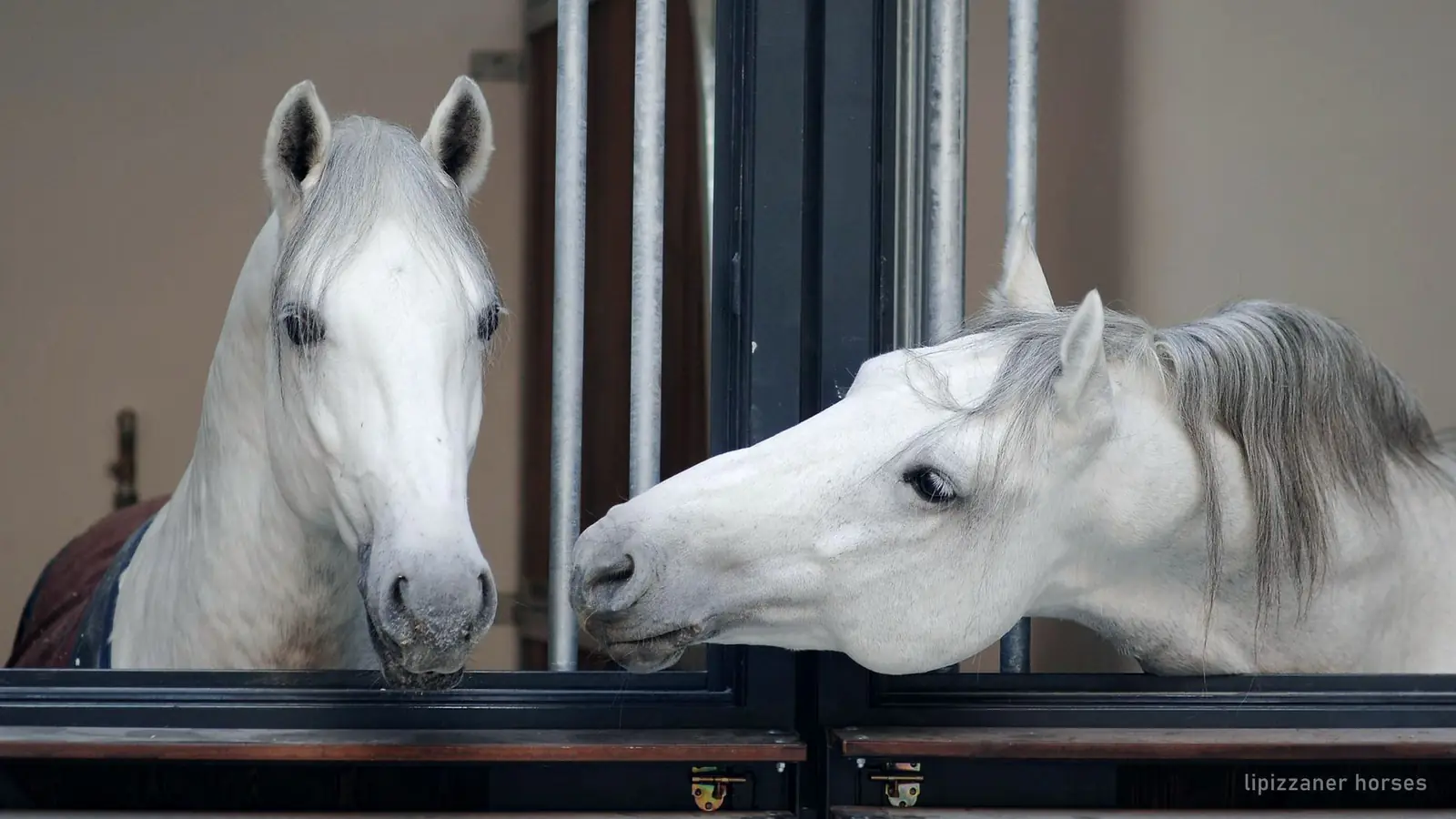
The Lipizzan, or Lipizzaner, is a European riding breed developed in the Habsburg Empire in the sixteenth century: muscular, powerful, slow to mature, long-lived, and almost always grey. Sixty-eight stallions live in the Stallburg inside the Hofburg and work in the Winter Riding School next door, which is why a horse breed has become one of the palace’s main attractions.
UNESCO added Lipizzan breeding traditions to the Representative List of the Intangible Cultural Heritage of Humanity in 2022, with eight countries named on the inscription.
Where the breed comes from
The ancestry runs back through Spain. Barb horses brought into Spain by the Moors were crossed with native stock to produce the Andalusian and the other Iberian breeds. In 1562 Emperor Maximilian II brought Andalusians to Austria and founded the court stud at Kladrub. In 1580 his brother, Archduke Charles II, established a similar stud at Lipizza — now Lipica, in Slovenia — and the breed took its name from the village. The village name itself comes from the Slovene lipa, linden tree.
At Lipizza, Spanish, Barb and Arabian stock were crossed, and later generations were crossed again with the now-extinct Neapolitan breed and with Spanish-descended horses from Germany and Denmark. Kladrub specialised in heavy carriage horses; the riding horses came from Lipizza.
Eight foundation stallions, all foaled in the late eighteenth and early nineteenth centuries, are recognised as the classic bloodstock. Every modern Lipizzan traces back to them, and every breeding stallion carries its line’s founder in its name.
Why they are born dark
This is the question visitors ask in the stables, and the answer is genetic rather than magical.
Lipizzans are grey horses, not white ones. Grey horses have black skin and dark eyes, are born with a pigmented coat — in Lipizzans usually bay or black — and lighten every year as the greying process runs its course. It finishes somewhere between six and ten years of age. A true white horse is born white with unpigmented skin; a Lipizzan is not.
Until the eighteenth century the breed came in dun, bay, chestnut, black, piebald and skewbald as well. Grey is a dominant gene and grey was what the imperial family preferred, so in a small closed population it took over almost completely. The Spanish Riding School keeps one exception alive deliberately: it is a long-standing tradition to have at least one bay stallion in residence, and that tradition continues.
The stud at Piber
Since 1920 the Piber Federal Stud, near Graz in western Styria, has been the main stud for the horses used in Vienna. The selection is unusually tight — only stallions that have proved themselves at the Riding School are allowed to stand at stud, and only mares that have passed performance testing are bred.
Piber holds around 360 horses. It is not the largest Lipizzan stud in Europe: Sâmbăta de Jos in Romania has about 400, and Lipica itself about 358. Almost 11,000 Lipizzans were registered with the Lipizzan International Federation as of 2012, across nineteen countries and nine state studs.
The stud has had bad years. A viral epidemic hit Piber in 1983 and killed forty horses and eight per cent of the expected foal crop.
The war years
Twice the breed came close to disappearing, and the second rescue has become the story everyone half-remembers from a Disney film.
In 1942 the German high command moved most of Europe’s Lipizzan breeding stock to Hostau in Czechoslovakia, taking the mares from Piber. In January 1945, with bombing raids reaching Vienna, the head of the Spanish Riding School, Colonel Alois Podhajsky, evacuated the school’s stallions to St Martins in Austria. By spring the Hostau horses were in the path of the advancing Soviet army.
On 28 April 1945 the US Second Cavalry, under Colonel Charles Reed, occupied Hostau, where 400 Allied prisoners of war were also being held. On 7 May, Podhajsky put on an exhibition of the stallions for General Patton — himself an Olympic horseman — and asked him to take the horses under his protection. “Operation Cowboy” recovered 1,200 horses in all, 375 of them Lipizzans, driven, ridden and trucked 56 km across the border into Germany.
The breeding stock returned to Piber in 1952. The stallions came back to the Spanish Riding School in 1955.
The working life
A stallion arrives at the school as a four-year-old and goes through three stages of classical training. The first, Remontenschule, is two to three months on the longe before a rider ever sits on him. The second, Campagneschule, teaches collection, lateral work and self-carriage and takes about two-thirds of the total training time — usually several years. Only then comes the haute école, where a horse may be taught the “airs above the ground”: the controlled leaps that the school is famous for.
Not every horse gets there. The airs are taught to the individuals with the temperament and physique for them.
Summers are spent out of Vienna. The sixty-eight resident stallions go to the summer stables at Heldenberg in Lower Austria for seven weeks in July and August, where they are kept in stalls with paddocks and hacked in the forest rather than schooled. If you are in Vienna in July or August, check before you plan a visit around the horses.
Seeing them in Vienna
Three different things, three different prices. Read from the school’s own ticket page on 18 September 2026:
| What | From | Runs for |
|---|---|---|
| Performance | EUR 26 | About 45 or 70 minutes |
| Morning exercise | EUR 17 | About 60 minutes |
| Guided tour of the building | EUR 24 | About 60 minutes |
| Architectural tour | EUR 26 | About 80 minutes |
The morning exercise is training, not choreography: the horses work to music, the hall is not full, and people who expect a show are sometimes disappointed. The performance is the finished article. The guided tour gets you into the Stallburg and the Winter Riding School without a horse performing at all.
One more thing worth knowing: the Spanish Riding School uses stallions exclusively in its performances. The mares stay at Piber, where they are trained for driving and under saddle.