
informational Pillar guide 8 min read
Inside the Hofburg: Every Wing and Museum
Updated September 18, 2026
The Hofburg is not a palace you walk around in an afternoon. It is a quarter of central Vienna that grew for seven centuries, and the single most useful thing to know before you arrive is that four different organisations sell tickets inside it. The palace operator runs the museum route. The Kunsthistorisches Museum runs the Imperial Treasury. The Austrian National Library runs the State Hall. The Spanish Riding School and the Albertina run themselves.
What the building actually is
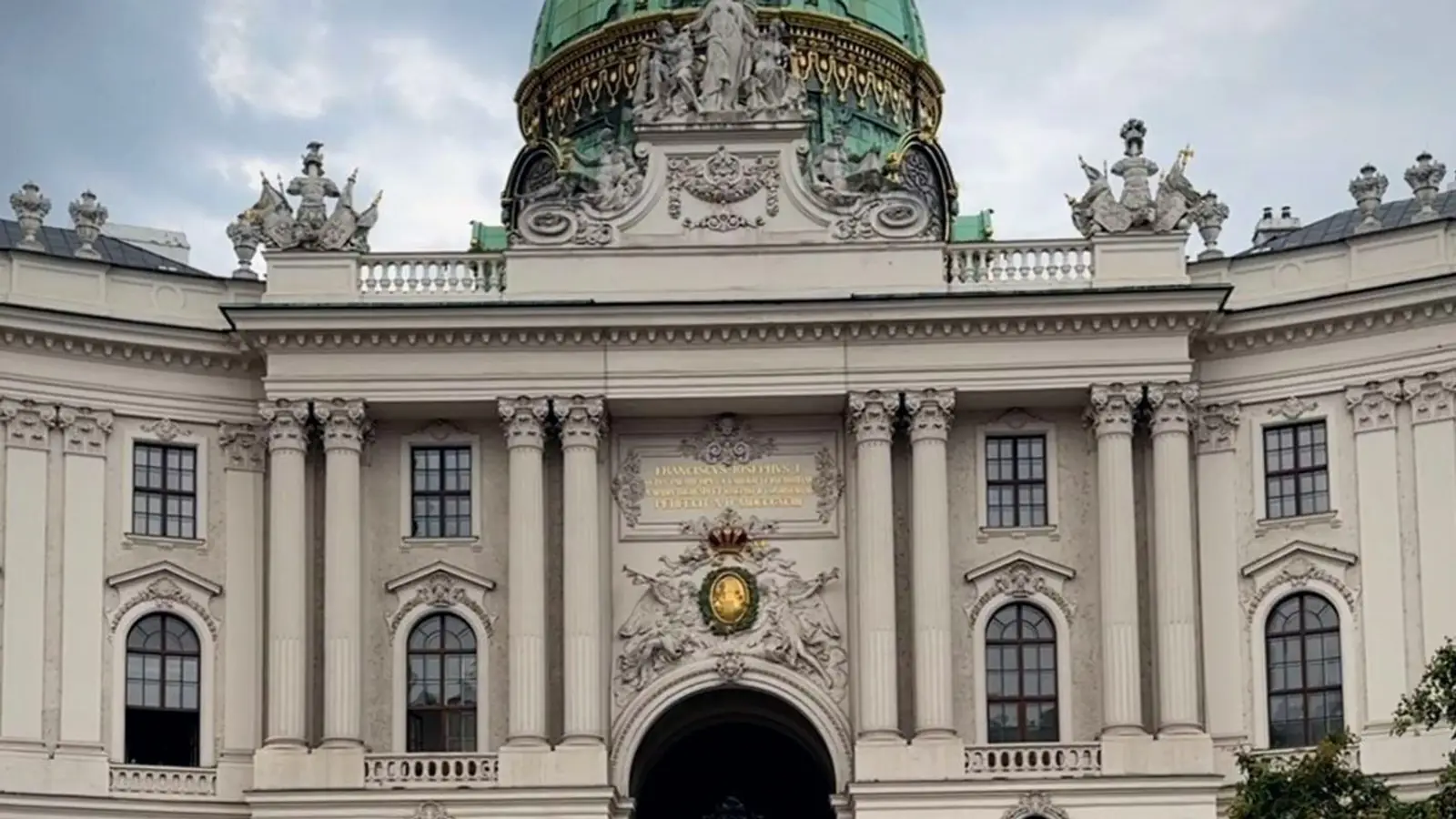
The Hofburg was the residence of the Habsburgs for over 600 years and, in the operator’s own words, “the centre of the Holy Roman Empire”. It was the seat of government and the winter residence; from the eighteenth century the court spent summers at Schönbrunn. Wikipedia dates the first building to the thirteenth century, under Ottokar II of Bohemia, with expansions in every century since.
That history explains the shape. Court ceremonial gave each member of the family their own apartment or suite in one of the wings, and most of those apartments now hold something else. The operator lists the current occupants plainly: museums, offices, government ministries and the presidential chancellery. Austria’s president works in a building you can walk past on the way to the crown jewels.
Which wing holds what
- Imperial Chancellery Wing and the Amalia Residence — the apartments of Franz Joseph and Elisabeth, open to the public on the palace ticket.
- The Stephan apartments — named after Archduke Stephan Viktor, and home to the Sisi Museum since 2004.
- Ground floor, on the same route — the Silver Collection, which looks after around 135,000 objects from the court’s dining departments.
- The Swiss Court (Schweizerhof) — the oldest part of the complex, holding the Imperial Treasury and the regalia of the Holy Roman Empire and the Austrian Empire.
- Josefsplatz — the State Hall of the Austrian National Library, the baroque library hall.
- The Winter Riding School — the Spanish Riding School, next to the Stallburg where the Lipizzan stallions are stabled.
- The Neue Burg — Weltmuseum Wien, the Collection of Historic Musical Instruments and the Imperial Armoury, sold on one ticket.
- The southern tip — the Albertina, its own museum with its own ticket.
What you cannot go into
Most of it. The ministries, the presidential chancellery and the offices are working buildings, and the congress centre hosts events rather than visitors. This is why the Hofburg can feel closed even when everything is open: the parts you can enter are a minority of the floor area, threaded between parts you cannot.
An order that works
Start outside. The courtyards — In der Burg and the Schweizerhof — and the squares at either end cost nothing and give you the scale, which no interior does. Then take the palace route in the morning while it is quiet, the Treasury before lunch, and something smaller in the afternoon: the State Hall, the Neue Burg museums, or the Albertina, which stays open until 21:00 on Wednesdays and Fridays.
Two scheduling traps are worth writing down. The Treasury closes on Tuesdays while the palace route stays open. And between 6 October and 18 November 2026 the museum section of the Sisi Museum is closed for refurbishment, with shorter hours and tickets 25% cheaper.