
informational 7 min read
Vienna to Hallstatt: Is the Day Trip Worth It?
Updated September 18, 2026
Hallstatt has a population of 780 and receives an estimated 10,000 to nearly 30,000 visitors a day. It is roughly the width of a single street, squeezed between a lake and a cliff, and it is the most photographed village in Austria.
It is also a long way from Vienna, and we are going to make the case against going before we make the case for it.
Why the journey is long
Hallstatt is in the Salzkammergut, in Upper Austria, on the south-western shore of the Hallstätter See. Getting there from Vienna means the Western Line towards Salzburg and then a change onto a regional service down into the lake district.
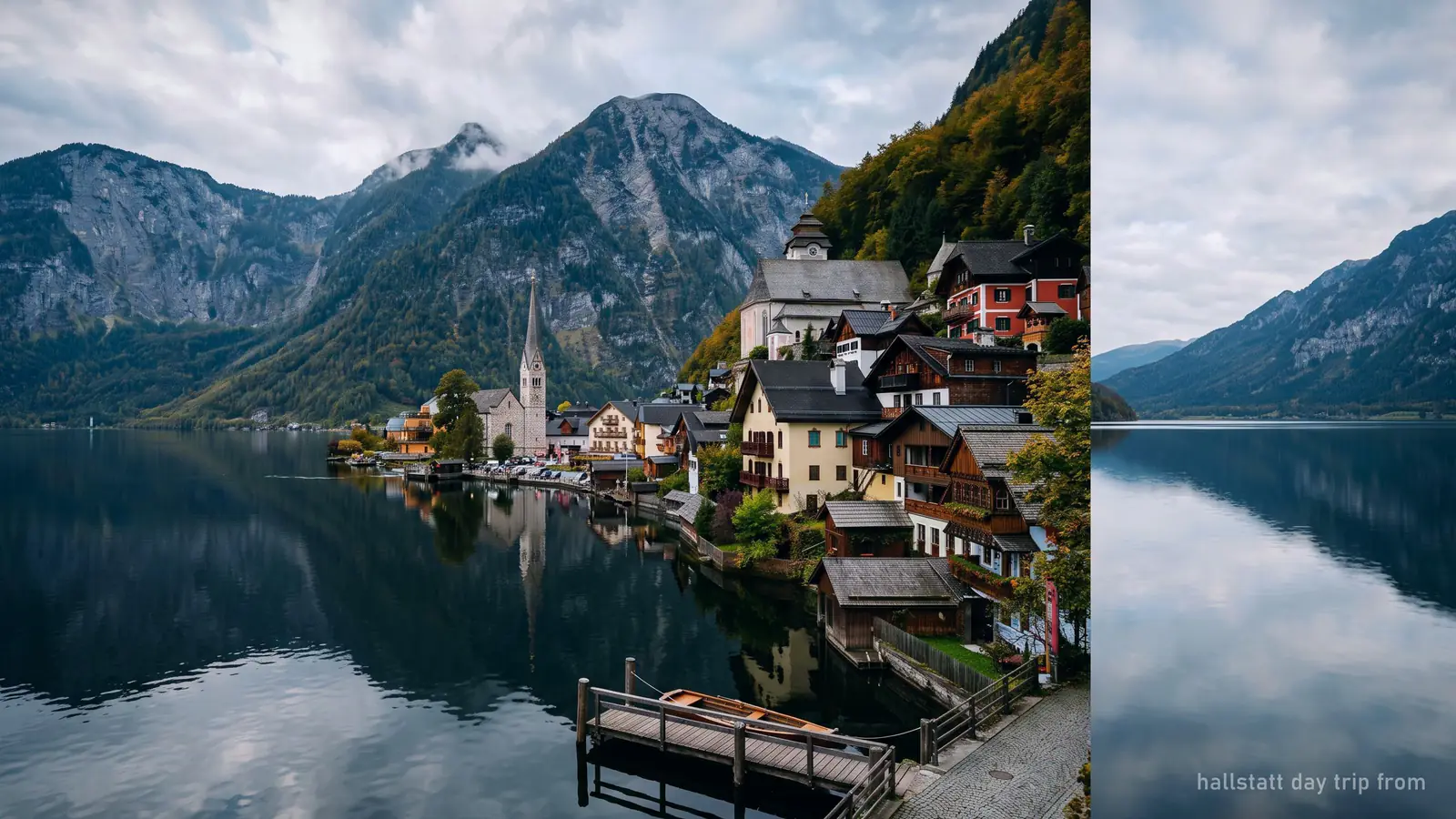
There is one more step that catches people out. The railway station is on the opposite shore from the village. From the station you take a small ferry across the lake, timed to meet the trains. It is a lovely arrival — the village comes towards you across the water, which is exactly the view on the postcards — and it is also one more connection to miss.
Allow around four hours each way and treat that as a floor rather than a target. ÖBB does not publish journey times on its route pages, so build your day from the actual timetable for your date, and identify the last workable train home before you leave Vienna.
What is actually there
Small, and better than its reputation suggests once the buses have gone.
The village itself. A lakeside street of houses stacked against the cliff. Twenty minutes to walk end to end.
The salt mine. The world’s oldest working salt mine, and the reason the place exists. The mine comprises 21 levels and shafts running from 514 m above sea level to around 1,267 m. Salt has been extracted here since the Bronze Age, in highly organised operations with specialist workers, and the wealth it generated is what fills the prehistoric cemeteries.
The ossuary. In St Michael’s Chapel: more than 1,200 human skulls, around 600 of them painted with symbols, names and dates. The tradition began because there was no room to bury anybody — bones used to be exhumed every ten years to make space.
The Hallstatt Museum. The Iron Age culture that takes its name from this village, c. 800–450 BC. In 1846 Johann Georg Ramsauer found a large prehistoric cemetery at the Salzberg mines and excavated 1,045 burials; some 1,300 have now been found, holding around 2,000 individuals. The salt preserved textiles, wood and leather, so the museum has miners’ shoes, cloth, tools and backpacks that should not have survived.
The Skywalk. A viewing platform 360 metres above the village, looking over the lake and the Dachstein.
The crowding problem
This is the part most articles skip, and it is the deciding factor.
Hallstatt’s tourism began in the nineteenth century, grew after the UNESCO listing in 1997, and exploded after a South Korean television show featured it in 2006. Social media captioned it “the most Instagrammable town in the world”. A rumour that it was the model for Arendelle in Frozen spread in China in 2013 — the filmmakers say the research was done in Norway and Canada, not Austria — and day visits climbed again.
The result is 780 residents and up to 30,000 visitors on a day, arriving mostly by coach for photographs and leaving again within the hour. By 2017 local churches were employing bouncers to stop services being disrupted.
The town has pushed back. From autumn 2020 tour buses have been given assigned time slots and arrivals capped at 54 a day, about half the previous number, with priority to buses whose passengers are staying overnight. In 2023 residents protested: two fences were built to stop people stopping for selfies, and removed after a social media backlash; in August protesters blocked the tunnel the buses use to enter. The mayor announced plans to cut bus numbers by a further third.
You are entitled to visit. You should know that the village has spent five years actively trying to reduce the number of people doing exactly what you are doing.
When to go, if you go
Early or late, and out of season.
The buses arrive mid-morning and leave mid-afternoon. A visitor who gets there before ten or stays past five sees a different village. From Vienna, the first is barely possible and the second means missing the last train back — which is the strongest argument of all for the alternative below.
Winter is quieter and the lake and the cliffs in low light are arguably better than the summer version. Some things close.
The alternative that actually works
Stay overnight. It is the single change that fixes everything about this trip. It converts eight hours of travelling into four, it puts you in the village in the evening and the early morning when the coaches are gone, and the town’s own bus policy gives priority to visitors who do it.
If you cannot, our honest recommendation is to do Hallstatt as a side trip from Salzburg on a longer Austrian itinerary rather than as a day out from Vienna — and to spend the day you have here on the Wachau valley instead, which is closer, emptier and does not need you to apologise for coming.