
informational 7 min read
The Imperial Chapel and the Vienna Boys' Choir
Updated September 18, 2026
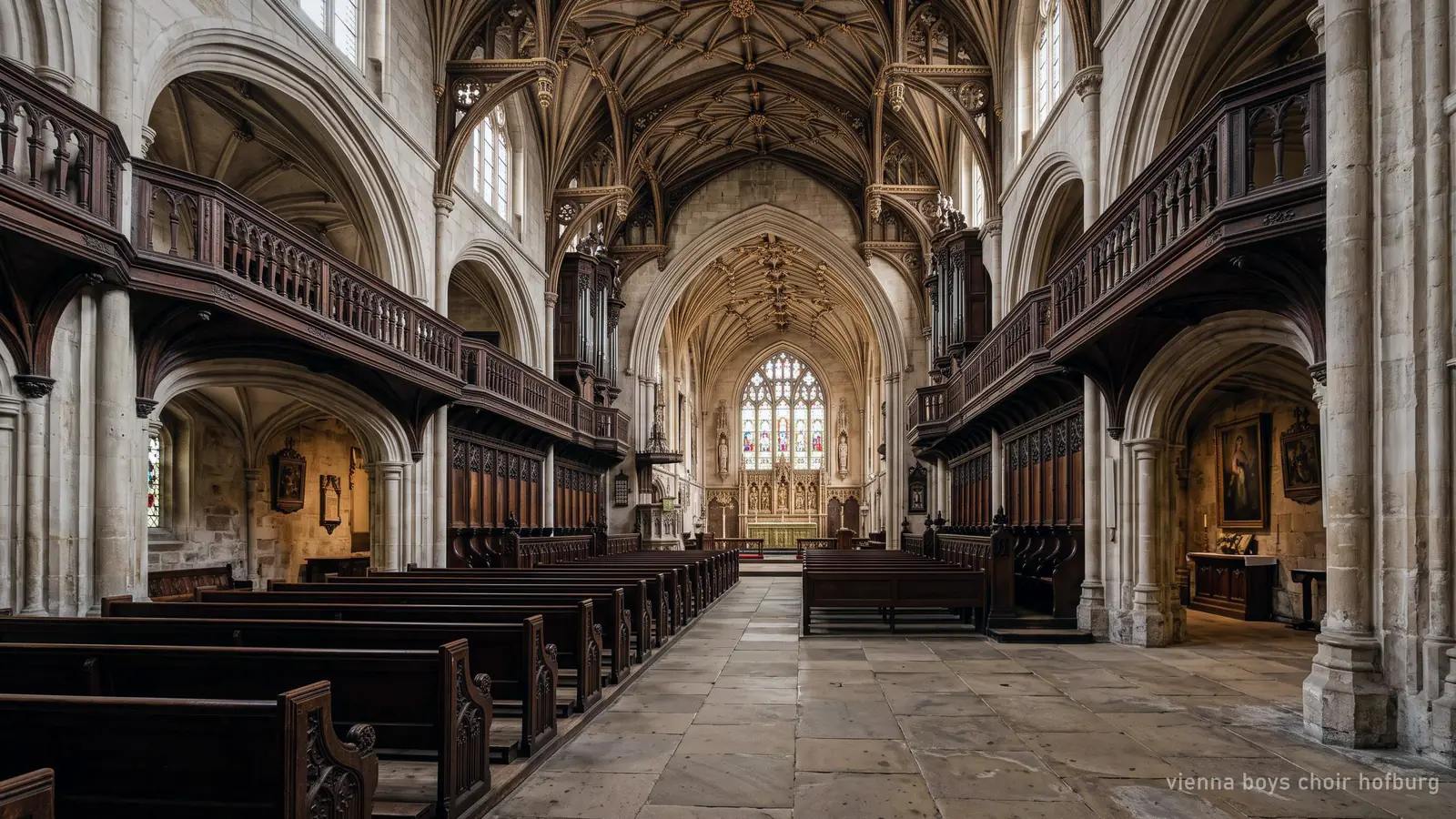
The cheapest ticketed music in the Hofburg costs EUR 14, and if you are prepared to stand it costs nothing at all. Every Sunday from September to June, the Vienna Boys’ Choir sings the 9:15 mass in the Hofburgkapelle — the palace’s own chapel, in the Schweizerhof — alongside members of the Vienna State Opera orchestra and men’s chorus. It is not a concert. It is a church service that happens to have one of the best-known choirs in the world in the gallery.
A job that has existed since 1498
The Wiener Hofmusikkapelle was created by a letter from Emperor Maximilian I on 30 June 1498, instructing his court officials to employ a singing master, two basses and six boys. Its job was to provide the music for the court mass. George Slatkonia was its first director.
Everything since has been continuity with interruptions. Over five centuries the ensemble has worked with Heinrich Isaac, Hofhaimer, Biber, Fux, Caldara, Gluck, Salieri, Mozart, Schubert and Bruckner. The court orchestra was disbanded in 1920 after the empire fell; in 1924 the rector, Josef Schnitt, refounded the boys as an independent, professional group — the Vienna Boys’ Choir as it now exists.
That is when the uniform changed. The imperial military cadet outfit, complete with dagger, was replaced by the blue-and-white sailor suit they still wear.
Today there are around 100 choristers between nine and fourteen, divided into four touring choirs named Bruckner, Haydn, Mozart and Schubert, giving something like 300 concerts a year to almost half a million people. Since 1948 they have rehearsed and boarded at the Palais Augarten. Singing the Sunday mass in the Hofburgkapelle is the one part of the job that has not changed since 1498.
What actually happens
Mass at 9:15 in the Hofburgkapelle, Hofburg-Schweizerhof — the oldest courtyard in the palace, the same one you pass through for the Imperial Treasury.
The performers rotate week by week. The programme lists the Vienna Boys’ Choir, the Vienna Girls’ Choir, members of the Vienna State Opera orchestra, the men of the State Opera chorus, and the Choralschola der Wiener Hofburgkapelle in varying combinations. You are not guaranteed the boys every week, so check the date you want against the published programme.
The choir sings from a gallery. From most of the chapel you hear them without seeing them — which is why the ticket categories are priced on sightlines rather than sound.
Tickets
Read from the Hofmusikkapelle’s own ticket page on 18 September 2026:
| Category | Price | What you get |
|---|---|---|
| 1 | EUR 52 | Good view of the altar or the orchestra |
| 2 | EUR 38 | View of the altar or the orchestra |
| 3 | EUR 22 | Limited view |
| 4 | EUR 14 | No view — listening tickets |
| Standing | Free | Available from 8:30 a.m. before mass |
The free standing room is the detail almost nobody outside Vienna knows, and it changes the calculation completely. If the point of the visit is to hear the choir sing in the chapel they have sung in since the fifteenth century, category 4 and the standing area hear the same thing as category 1.
Arrive early if you want to stand. Tickets are released at 8:30 for a 9:15 service and there is no reservation.
How to book a seat
Online through Culturall, which the Hofmusikkapelle uses as its ticketing system, or in person. The chapel’s own box office, at the Hofburgkapelle in the Schweizerhof, sells tickets for Sunday masses on Fridays from 11:00 to 13:00 and 15:00 to 17:00, and on the morning of the mass itself from 8:00 to 8:30. Written reservations by post and by email are also accepted; the address is published on the ticket page.
The season
The published programme for 2026/27 runs from 20 September 2026 to 27 June 2027. There is no Sunday mass with the choir in July or August — the same summer gap that takes the Lipizzaners out of the city.
If your trip falls in the summer, the Hofburg’s commercial concerts are the alternative, but they are a different proposition entirely: an orchestra playing Mozart and Strauss for a paying audience in a ballroom, not a liturgy.
Before you go
It is a mass, and behaving like an audience is the way to get it wrong. Come as you would to a church service, stay for the whole thing rather than leaving after the music, and take your cues from the congregation. There is no formal dress code, but the chapel is small and you will be noticed.
Combine it with the Schweizerhof afterwards: the Imperial Treasury is in the same courtyard and opens at 09:00, so the mass ends more or less as the crowd there is thinning out.